

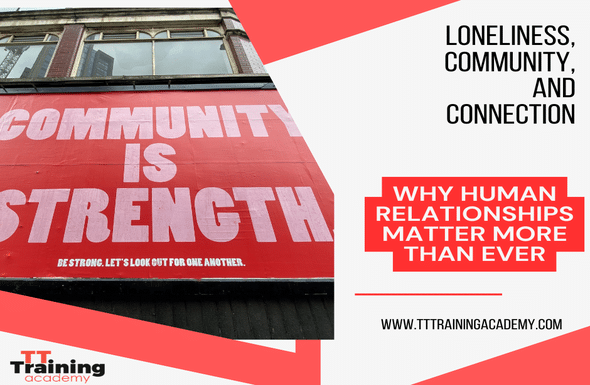
Loneliness, Community and Connection
Why Human Relationships Matter More Than Ever

In an age where we are constantly connected through technology, many people are experiencing a growing sense of loneliness. Despite having hundreds of online contacts and instant access to communication, genuine human connection has become increasingly difficult to find. As a result, loneliness is emerging as one of the most significant wellbeing challenges of our time.
The good news is that community and meaningful relationships can play a powerful role in improving mental health, emotional resilience, and overall life satisfaction.
Understanding Loneliness
Loneliness is more than simply being alone. It is the feeling of lacking meaningful social connections or not having relationships that provide emotional support and understanding.
A person can feel lonely in a crowded room, while someone living alone may feel deeply connected through strong friendships and community involvement. Loneliness is a subjective experience that affects people of all ages, backgrounds, and lifestyles.
Common signs of loneliness include:
- Feeling isolated or disconnected from others
- Struggling to find people who understand you
- Increased anxiety or sadness
- Low motivation and energy levels
- Difficulty maintaining positive mental wellbeing
The Impact of Loneliness on Mental Health
Research consistently shows that chronic loneliness can have serious effects on both mental and physical health. It has been linked to:
- Increased stress levels
- Higher risk of anxiety and depression
- Reduced self-esteem
- Sleep difficulties
- Poor emotional resilience
When people feel disconnected, they often lack the support systems that help them navigate life's challenges. Over time, this can create a cycle where loneliness leads to withdrawal, making it even harder to build meaningful relationships.
Why Community Matters
Humans are naturally social beings. Throughout history, communities have provided safety, support, and a sense of belonging. Today, strong communities continue to offer many benefits, including:
Emotional Support
Community creates opportunities to share experiences, seek advice, and receive encouragement during difficult times.
Sense of Belonging
Being part of a group helps people feel valued, accepted, and connected to something larger than themselves.
Improved Mental Wellbeing
Regular social interaction can boost mood, reduce stress, and increase feelings of happiness and purpose.
Personal Growth
Communities expose individuals to new perspectives, experiences, and opportunities for learning and development.
Practical Ways to Build Connection
Building meaningful relationships does not require a large social circle. Small, consistent actions can make a significant difference.
Join Local Groups
Community clubs, sports teams, volunteering opportunities, and hobby groups provide natural ways to meet people with shared interests.
Prioritise Face-to-Face Interaction
While digital communication has value, in-person conversations often create deeper emotional connections.
Reach Out Regularly
A simple message, phone call, or invitation for coffee can strengthen existing relationships and open the door to new ones.
Practice Active Listening
Meaningful connection grows when people feel heard and understood. Being fully present during conversations helps build trust and stronger bonds.
Create Healthy Routines
Regular social activities, such as weekly walks, fitness classes, or community events, can help maintain consistent connections over time.
Connection in a Digital World
Technology offers many ways to stay in touch, but it should complement, not replace, real-world relationships. The most meaningful connections often come from shared experiences, genuine conversations, and mutual support.
Balancing online interaction with face-to-face engagement can help create healthier and more fulfilling relationships.
Final Thoughts
Loneliness is a growing challenge, but it is not inevitable. By prioritising community, nurturing meaningful relationships, and actively seeking opportunities for connection, individuals can improve their mental wellbeing and develop stronger emotional resilience.
In a world that often feels increasingly disconnected, building genuine human connections may be one of the most powerful wellbeing practices available.
FAQ's
Why is loneliness becoming more common today?
Modern lifestyles, remote working, increased screen time, and reduced community engagement have contributed to feelings of social isolation despite greater digital connectivity.
How does the community improve mental health?
Community provides emotional support, a sense of belonging, social interaction, and opportunities to build meaningful relationships, all of which contribute to better mental wellbeing.
What are simple ways to overcome loneliness?
Joining local groups, volunteering, reconnecting with friends, participating in community events, and scheduling regular social activities can help reduce loneliness and strengthen connections.
No Comments